Hobby Farming And Homesteads In Chino Valley
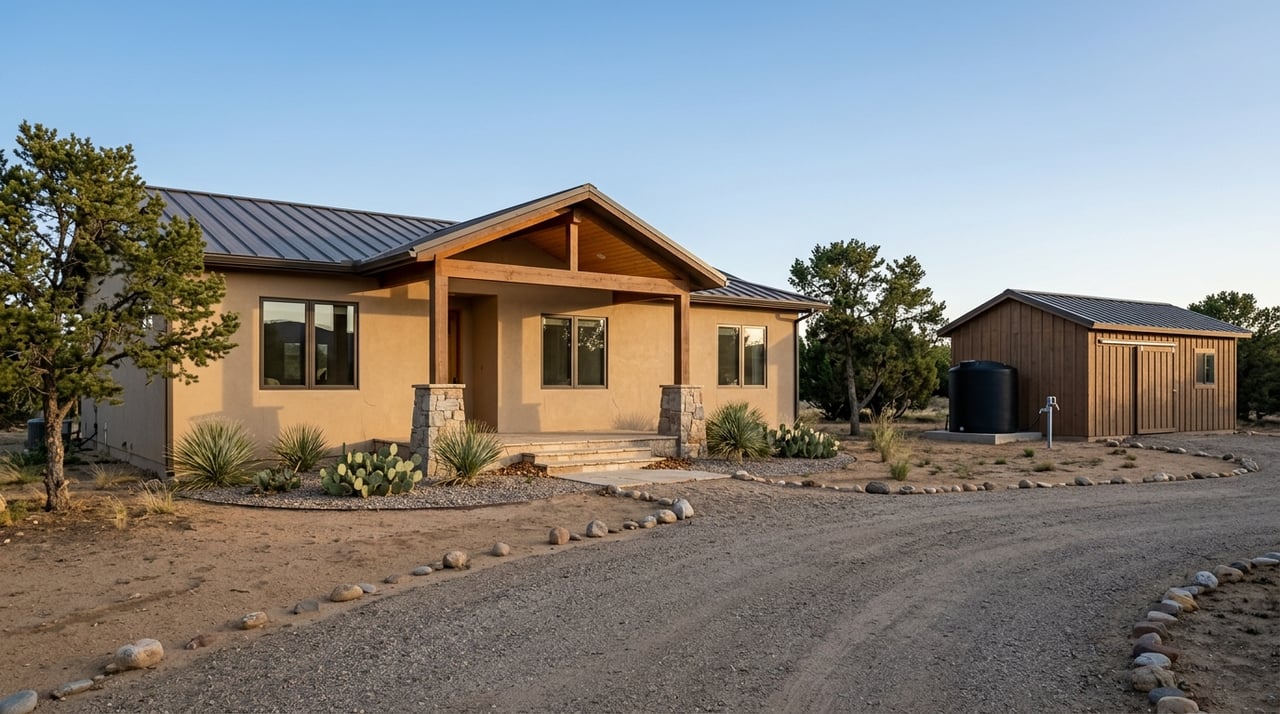
Dreaming about chickens, a garden, a barn, or a few animals on your own piece of land in Chino Valley? That vision can be very real here, but the details matter more than many buyers expect. If you want a hobby farm or homestead that works the way you hope, you need to look closely at zoning, animal rules, water, and site planning before you buy. Let’s dive in.
Chino Valley attracts buyers who want more space, flexibility, and a property that can support a hands-on lifestyle. You may be looking for room for a garden, small livestock setup, outbuildings, or simply a more self-directed way of living.
That said, not every acreage property works the same way. Two parcels can look similar online and still have very different rules based on whether they are inside town limits or in unincorporated Yavapai County.
Before you get excited about fencing, barns, or planting plans, confirm who governs the parcel. In Chino Valley, acreage may fall under Town of Chino Valley rules or Yavapai County rules, and that difference shapes what you can do with the land.
Inside town limits, the Unified Development Ordinance governs uses, setbacks, building height, density, and livestock-related rules. The Town also notes that the Zoning Administrator interprets the code, and appeals can go to the Board of Adjustment.
In unincorporated areas, zoning questions go through the Yavapai County Planning Unit. The county also makes an important point for buyers: GIS structure data is used for assessment purposes and is not proof that a structure, use, or permit is valid.
One of the biggest mistakes buyers make is assuming all agricultural zoning allows the same uses. In Chino Valley, agricultural and residential-agricultural districts are not interchangeable.
The town’s AR-36 district has a 36-acre minimum, allows one principal dwelling, and lists agriculture, cultivation, and ranching as conditional uses. It also includes development standards such as 100-foot front and rear setbacks, 50-foot side setbacks, a 50-foot height limit, and 15% lot coverage.
AR-5 and AR-4 are more explicit about hobby-farm style uses. These districts list farming and agriculture, livestock, barns, corrals, coops, non-commercial greenhouses up to 600 square feet, storage sheds, and metal storage containers. Commercial greenhouses require 10 contiguous acres.
If the property is outside town limits, county zoning rules apply instead. That means you should verify the exact county zoning designation and ask how your intended use fits that zoning before you close.
If your goal is a practical homestead setup, this step is worth slowing down for. A quick zoning check can save you from buying a parcel that looks ideal but does not fit your plans.
For hobby farms and homesteads, animal rules are often the deciding factor. It is not just about whether animals are allowed. It is also about how many, what type, and whether the setup could be considered a nuisance.
In town, household pets are allowed in all zones. Non-household animals such as horses, cattle, sheep, goats, swine, bees, poultry, and similar animals are allowed only where the code specifically permits them.
For some smaller homestead-style properties, the town has a limited 4-H and FFA project-animal exception. That exception allows up to nine project animals with annual registration, required signage, pens at least 10 feet from property lines and outside front or street-side yards, enclosed feed storage, and nuisance control. The Development Services Director can require reduction or removal if the project becomes a nuisance.
In unincorporated Yavapai County, animal allowances are more formula-based. The county says farm animals are allowed on 70,000-square-foot parcels in R1L and RMM and on 35,000-square-foot parcels in R1 and RCU.
The county also allows non-commercial chickens on smaller lots, with a maximum of eight birds, 15-foot setbacks from property lines, no roosters, and indoor storage for feed and equipment. For larger livestock groups, the county uses per-acre limits, and swine are capped at five per parcel.
The county also waives setback and per-acre limits for 4-H projects, except for equine and breeding projects. If animals are part of your plan, it is smart to confirm your exact mix before you move forward.
A parcel may look perfect on paper, but water often becomes the real limiting factor. If you want animals, orchards, gardens, pasture, or greenhouse use, water diligence is essential.
Chino Valley’s utilities division operates town water sources, wells, treatment, and storage facilities. The town also uses managed aquifer recharge as part of its water strategy, and its recharge facility is described as capable of handling 1 million gallons per day, with expansion capacity to 5 million gallons per day.
The town’s conservation guidance points buyers toward xeriscape and efficient irrigation practices. That is a practical reminder that you should budget and plan for water use early, especially if your homestead goals include irrigation-heavy improvements.
The Arizona Department of Water Resources identifies Chino Valley as part of the Prescott Active Management Area and notes that groundwater is the basin’s main source of supply. For buyers, that means you should confirm whether the property has town water or a private well, then verify well yield, storage, and water quality before relying on the land for larger agricultural use.
Town code also states that lots under one acre must be served by a water and or sewage disposal system approved by the Town. Even if a property listing sounds turnkey, it is worth confirming the infrastructure directly.
A hobby farm usually involves more than a house and open land. Buyers often want barns, storage sheds, coops, corrals, greenhouses, or even metal containers for equipment and supplies. Those improvements may be allowed, but placement and timing matter.
In town, detached accessory buildings cannot be placed in the required front yard. They must also be at least 8 feet from the main structure and 10 feet from rear and interior side lot lines, while street-side setbacks depend on the zoning district.
In the town’s agricultural districts, customary accessory structures include barns, corrals, private arenas, training tracks, coops, non-commercial greenhouses up to 600 square feet, storage sheds, and metal storage containers. One key detail is that accessory structures cannot be built before the permit for the primary residence is issued.
Town rules for metal containers are detailed enough to influence how you plan a property. AR-36, AR-5, and AR-4 allow one container per acre with district maximums, painting requirements, and screening rules along SR-89. Temporary construction containers are also allowed during approved construction.
In county areas, detached accessory structures that do not house animals may be placed within 5 feet of the rear lot line, though other setbacks and building-spacing rules still apply. This is another reason parcel-specific verification matters.
Some buyers are not just thinking about today’s use. You may also be wondering whether you can divide the property later, change its use, or maintain an agricultural exemption.
Yavapai County has an agricultural exemption for tracts of five or more contiguous commercial acres, but the county says that exemption can be reviewed and canceled if the property no longer meets the standards. If future flexibility matters to you, ask about the current status and what would be required to keep it.
If you may split land later, county rules for minor land division can apply to five or fewer lots, parcels, or fractional interests of 10 acres or smaller in unincorporated areas. This is the kind of issue that should be discussed before you buy, not after.
If you are serious about hobby farming or homesteading in Chino Valley, keep your due diligence simple and focused.
Acreage and homestead properties can be exciting, but they are rarely simple. The right property is not just about views or usable land. It is about matching your goals to zoning, water, infrastructure, and practical site constraints.
That is especially true in Chino Valley, where town and county rules can differ significantly from one parcel to the next. If you want a property that supports your plans from day one, careful research and local guidance can make the process smoother and help you avoid expensive surprises.
Whether you are relocating, buying your first acreage property, or looking for a more technical review of a parcel, working with someone who understands wells, septic, zoning, and rural site planning can give you more confidence. If you are exploring hobby farms or homesteads in Chino Valley, Peter Fife can help you evaluate the details and find a property that truly fits your goals.
Stay up to date on the latest real estate trends.